
fiqh
-

Proofs for the Obligation of Khuruj Key Reminder: After a request from a dear brother, we have decided to summarise the key arguments from the Qur’an and Sunnah in regards to the obligation of enjoining good, forbidding evil, rendering the judgement to God. This Divine obligation can only be enacted if there is tamkeen (possibility).…
-

Can Islamic Law Change Based on Time, Context and Custom? – Introduction This article is an academic response to the controversial subject of the changeability of Shari’i injunctions and certain rulings being based on the custom of the people of that time rather than the ruling being applied universally in all times and places. To…
-

Dedication: Our aim is for the Muslim Ummah to be objective, fair and impartial in pursuit of truth and oppose the culture of sectarianism, fanaticism and blind-following. Allah has promised to preserve the Divine Revelation, not protect sects or men from misguidance. So follow the evidence o Muslim and do not imitate the inherited religion…
-

Muhammad ibn Yahya has narrated from Ahmad ibn Muhammad ibn ‘Isa from al-Husayn ibn Sa‘id from ‘Uthman ibn ‘Isa from Mansur ibn Hazim from Bakr ibn Habib who has said the following: “I once asked abu Ja‘far (a.s), about Tashahhud (the testimony of belief). He (the Imam) said, ‘Had it been as they say that…
-

By Faheem Nadeem Maliki Usul Split into Explicit texts (Nass) and Apparent (dhahir) texts. Nass texts are not open to interpretation whereas dhahir can be interpreted. Shafi’i considered to Nass and Dhahir to be interchangeable, in the Maliki position the Nass is stronger than the dhahir. A dhahir text can mean one of two…
-

Sunni Doctrine of Shafa’a & Salvation for Evildoers Introduction The doctrine of the Prophet Muhammad’s intercession, mediation and negotiation saving the Muslims on the Day of Judgement is a vital doctrinal belief for the majority of Muslim schools, such as the Ash’aris, Maturidis & Atharis. If this doctrine is textually proven, then surely it is…
-

Acknowledgements Firstly, I thank my dear friends Raza Rizvi & Muhammed al-Sharifi for helping me gather these quotes, references & arguments in regard to Shi’a Imamate and the theological belief that ʿAlī b. Abī Ṭālib is Divinely appointed as the political leader. I acknowledge their great efforts and I acknowledge that they have helped me…
-

Acknowledgment I would like to acknowledge & thank Prima Quran for his articulate articles regarding the correct rules & regulations of marriage & divorce laws under Shari’a through the clear verses of the Qur’an & the practice of the established Sunnah of the Prophet Muhammad that was undermined by some later schools of Islamic jurisprudence.…
-
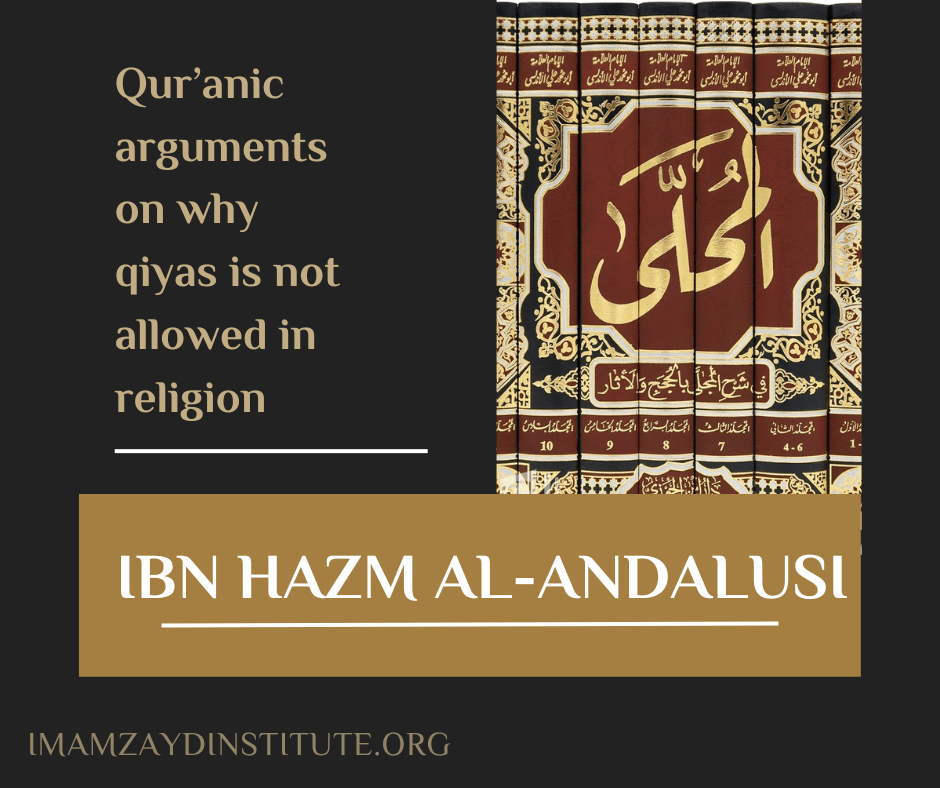
Refutation of qiyas (analogy in religion) by Ibn Hazm Ibn Hazm cites in refutation of qiyas include: Qur’an 42:21: “What! Have they partners (in godhead) who have established (sharau) for them some religion for which God has given no permission?;” Qur’an 65:1: “And any who transgresses the limits of God does verily wrong his (own)…
 Tajdeed