
justice
-
İslami Boşanma Kanunları Yanlış Anlaşılıyor – Hülle Burada bu ayetlerden birkaç önemli şey çıkarabiliriz. İlk olarak, erkek tarafından tek seferde veya tek oturuşta anında üçlü boşanmanın olmadığını anlıyoruz çünkü bu, başkaları tarafından uydurulmuş, hem Kur’an’a hem de Sünnet’e yabancı bir uygulamadır. Bir erkeğin üç kez boşandıktan sonra eski karısıyla evlenmesini yasaklayan İslami hüküm, eski karısına…
-

Acknowledgment I would like to acknowledge & thank Prima Quran for his articulate articles regarding the correct rules & regulations of marriage & divorce laws under Shari’a through the clear verses of the Qur’an & the practice of the established Sunnah of the Prophet Muhammad that was undermined by some later schools of Islamic jurisprudence.…
-

Concealed Hadiths about obeying the disobedient Rulers Whoever innovates something in this matter of ours, that is not from it, then it is rejected. It is a well-known Sahih Hadith recorded by Al-Bukhari, Muslim and Abu Dawud. – Abdullah bin Mas’ud related that the Prophet (saw) said: “Your affairs after me will be governed by…
-

Allah decrees & judges based on truth not randomness Bismillah I have always had an intuitive & rational distance & despise against the general Ash’arite concept of good & evil which is then tied to theories regarding the causes behind God’s commandments, legislations & decree. It is impossible for God’s will & law to be…
-
Refutation of qiyas (analogy in religion) by Ibn Hazm Ibn Hazm cites in refutation of qiyas include: Qur’an 42:21: “What! Have they partners (in godhead) who have established (sharau) for them some religion for which God has given no permission?;” Qur’an 65:1: “And any who transgresses the limits of God does verily wrong his (own)…
-
Is everything halal or haram? Bismillah “According to our author, all rulings of the Shari’a, without exception, fall into three categories: obligatory (fard), prohibited (Harâm) and permitted (mubah). That which is recommended (mandub) and that which is reprehensible (makruh) fall into the third category – namely, that of the permitted – since they are not…
-
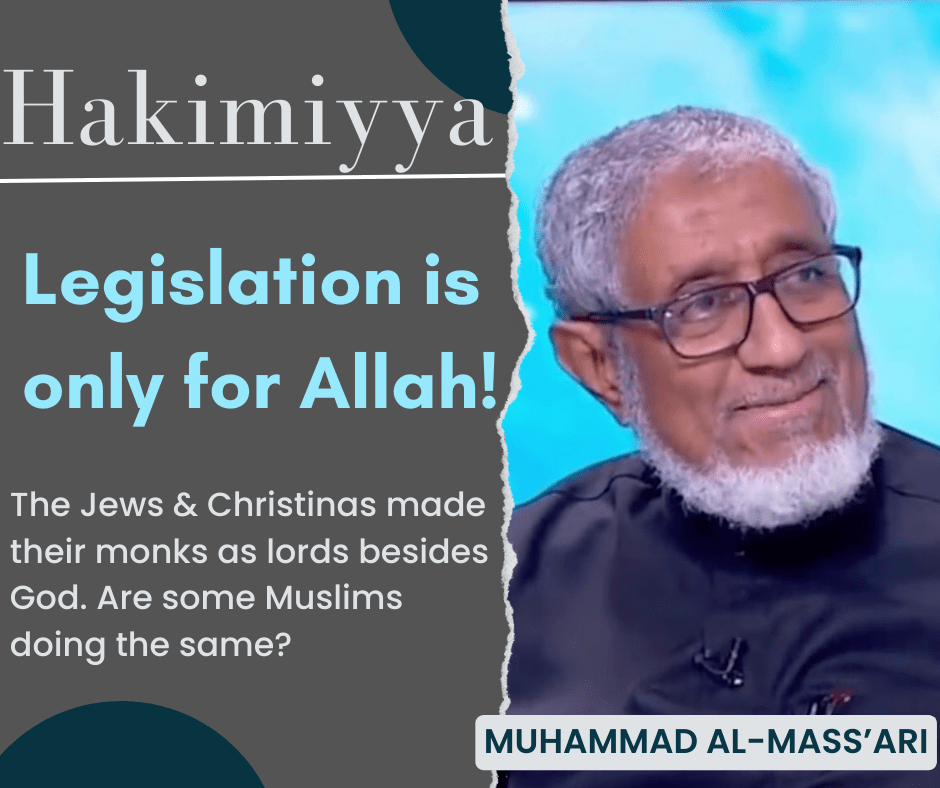
Ahlul-Kitab took their rabbis as lords besides God, are some Muslims doing the same? Bismillah Allah says, ‘They (Jews and Christians) took their rabbis and their monks to be their lords besides Allah’ (9:31). Dr Muhammad al-Mass’ari: “The following came in respect to the Tafsir (explanation) of this Ayah (verse), from ‘Adi bin Hatim, may…
-

What is righteousness according to the Qur’an? ‘Righteousness is not in turning your faces towards the east or the west. Rather, the righteous are those who believe in Allah, the Last Day, the angels, the Books, and the prophets; who give charity out of their cherished wealth to relatives, orphans, the poor, ˹needy˺ travellers, beggars,…
-

Selflessness – Zayd wanted to sacrifice himself for God & the well-being of the Ummah! Ima̅m Zayd had dedicated his life to Allah. He would only think about what would be in the best interest of the ummah and what would satisfy its Creator. He would never hesitate to do whatever would serve the ummah…
 Tajdeed