
salafi
-
Response to Shaykh Saeed Kamli: BISMILLAH Now the issue with Shaykh Saeed Kamli of Morocco is this, if the people that he is addressing actually said “I feel like this opinion or fatwa is wrong (without evidence)”, then he would certainly be correct to say “who cares about your feelings!”. This is how Allah makes…
-

Clarification: After a dear brother requested to prove the Divine obligation of removing corrupt, unjust Muslim rulers from power when having the Tamkeen (ability to do so), and then delegating the right of sovereignty and kingship to its rightful owner (i.e. the Creator). We decided to compile the key textual proofs from the Qur’an and…
-

Mutashabihat in the Qur’an Acknowledgements I appreciate the work of Sayed Ali Hurr Kamunpoori from the Shi’a Reformist group Al-Islaah, it was he who has allowed me to understand this concept properly through his student, my friend Muhammad Qa’im al-Islaahi. I acknowledge the great works of the two giants of Qur’an-Centrism Hamiduddin al-Farahi & Amin…
-

Kalam – Hand of God? Literal or Metaphorical? An analysis of the Qur’anic usage of metaphorical language in relation to the concept of Mutashabihat (ambiguous and/or allegorical verses) related to the subject of God, the Hereafter and Divine actions. The Anthropomorphist doctrine is advocated by the Salafi school, influenced by Ibn Taymiyya and Muhammad b.…
-

“Al-Zamakhsharī cites two examples explaining how a ‘perspicous’ (muḥkam) verse can provide the basis for interpreting an ‘ambiguous’ (mutashābih) verse. He considers that “Looking upon their Lord” (ilā rabbihā nāẓiratun) is an ‘ambiguous’ (mutashābih) verse which can be interpreted by a ‘perspicous’ (muḥkam) verse: “Vision cannot attain Him,” (lā tudrikuhu al-abṣār). Similarly, “We command its…
-

By Faheem Nadeem Maliki Usul Split into Explicit texts (Nass) and Apparent (dhahir) texts. Nass texts are not open to interpretation whereas dhahir can be interpreted. Shafi’i considered to Nass and Dhahir to be interchangeable, in the Maliki position the Nass is stronger than the dhahir. A dhahir text can mean one of two…
-
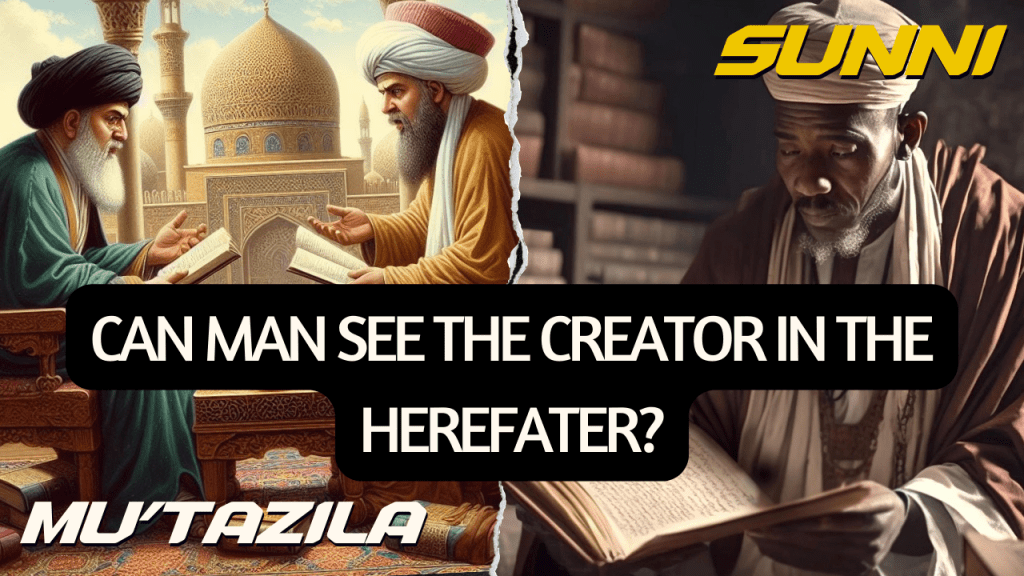
I dedicate this work mainly for the Muslim Ummah who disagree & quarrel over such a vital part of religion & theology. This research presents the varying usage of the Muhkamat (explicit) verses to fully apprehend the concept of mutashabihat (ambiguous/allegorical) verses in relation to metaphysical matters such as God, Divine attributes and the Hereafter…
 Tajdeed