
shia
-

Response to Shaykh Saeed Kamli: BISMILLAH Now the issue with Shaykh Saeed Kamli of Morocco is this, if the people that he is addressing actually said “I feel like this opinion or fatwa is wrong (without evidence)”, then he would certainly be correct to say “who cares about your feelings!”. This is how Allah makes…
-

I have written this before, and now this is the new edited version of it after coming across the new Fake Mahdi from the Yamani Ahmadi Religion Cult Bismillah During the period I was getting interested in religion, I was looking into different religions, schools of thought and scholars. Naturally, I even came across vile…
-

Dedication: Our aim is for the Muslim Ummah to be objective, fair and impartial in pursuit of truth and oppose the culture of sectarianism, fanaticism and blind-following. Allah has promised to preserve the Divine Revelation, not protect sects or men from misguidance. So follow the evidence o Muslim and do not imitate the inherited religion…
-

Clarification: After a dear brother requested to prove the Divine obligation of removing corrupt, unjust Muslim rulers from power when having the Tamkeen (ability to do so), and then delegating the right of sovereignty and kingship to its rightful owner (i.e. the Creator). We decided to compile the key textual proofs from the Qur’an and…
-

Mutashabihat in the Qur’an Acknowledgements I appreciate the work of Sayed Ali Hurr Kamunpoori from the Shi’a Reformist group Al-Islaah, it was he who has allowed me to understand this concept properly through his student, my friend Muhammad Qa’im al-Islaahi. I acknowledge the great works of the two giants of Qur’an-Centrism Hamiduddin al-Farahi & Amin…
-

Qur’an: Can Muslims earn Salvation without Repentance from Major Sin? Bismillah Introduction The ultimate question is, what is it that leads one to enter the hellfire according to the Qur’an? Many people question whether the Qur’an sends all sinners to eternal damnation. Many cannot reconcile concepts such as Divine mercy, Divine promise and Divine justice.…
-

Muhammad ibn Yahya has narrated from Ahmad ibn Muhammad ibn ‘Isa from al-Husayn ibn Sa‘id from ‘Uthman ibn ‘Isa from Mansur ibn Hazim from Bakr ibn Habib who has said the following: “I once asked abu Ja‘far (a.s), about Tashahhud (the testimony of belief). He (the Imam) said, ‘Had it been as they say that…
-

Kalam – Hand of God? Literal or Metaphorical? An analysis of the Qur’anic usage of metaphorical language in relation to the concept of Mutashabihat (ambiguous and/or allegorical verses) related to the subject of God, the Hereafter and Divine actions. The Anthropomorphist doctrine is advocated by the Salafi school, influenced by Ibn Taymiyya and Muhammad b.…
-
Sunni Doctrine of Shafa’a & Salvation for Evildoers Introduction The doctrine of the Prophet Muhammad’s intercession, mediation and negotiation saving the Muslims on the Day of Judgement is a vital doctrinal belief for the majority of Muslim schools, such as the Ash’aris, Maturidis & Atharis. If this doctrine is textually proven, then surely it is…
-
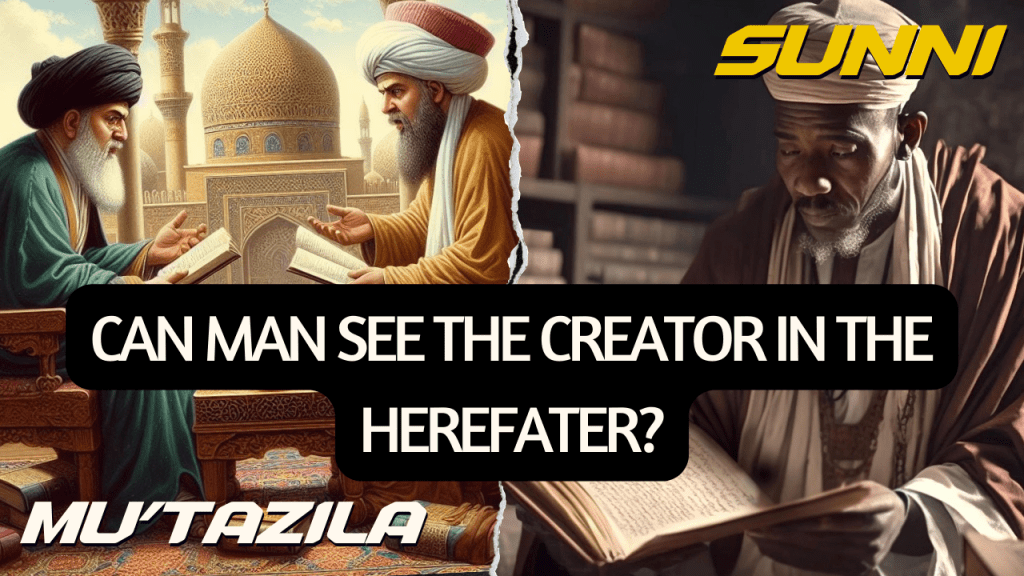
I dedicate this work mainly for the Muslim Ummah who disagree & quarrel over such a vital part of religion & theology. This research presents the varying usage of the Muhkamat (explicit) verses to fully apprehend the concept of mutashabihat (ambiguous/allegorical) verses in relation to metaphysical matters such as God, Divine attributes and the Hereafter…
 Tajdeed